Debunking Piercing Myths
Our Nurse Leadership Team Debunks the Most Common Piercing Myths

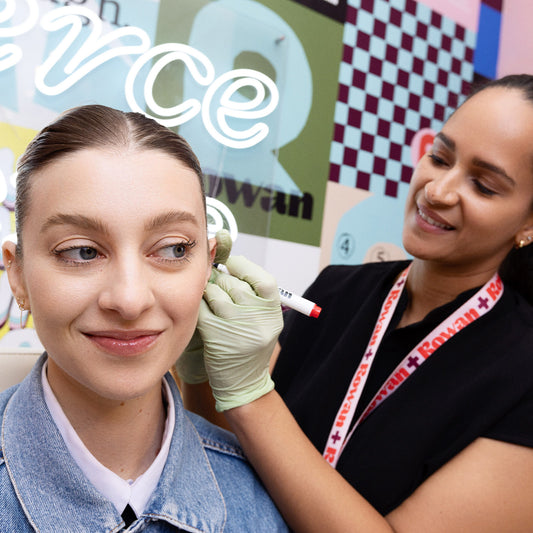
Ear piercing is a fun way to experiment with self-expression, but getting a new piercing can feel daunting if you're not sure what to expect. That's why our Rowan Piercing Nurses are here to bust the most common ear piercing myths and help make your piercing experience safe, empowering, and stress-free.
Myth #1: It is Common to Experience Adverse Reactions to Ear Piercing
Truth: Less than 1% of ear piercings at Rowan result in an adverse outcome.
At Rowan, our adverse reaction rate is less than 1% — compared to an industry average of 30%. Still, we know it can be hard to tell the difference between normal irritation and an actual piercing infection. Check out our guide on how to tell if your piercing is infected or just irritated to learn the warning signs.
*This content is for informational purposes only and is not medical advice.
Myth #2: Aftercare Doesn't Really Matter
Truth: Piercing aftercare is just as important as the piercing itself.
At Rowan, we treat aftercare as a core part of the process, not an afterthought. Our nurses give you detailed, personalized instructions based on your piercing type and placement, plus tips tailored to seasonal conditions that can affect healing. You'll leave the studio informed, confident, and set up for a smooth healing process.
Myth #3: Needle Piercing Hurts Less Than Device Piercing
Truth: There's no real difference in pain between needle and device piercing.
Our customer surveys show no statistically significant difference in perceived pain between hand-pressurized device piercing and traditional needle piercing. Both methods are quick, safe, and performed by our highly trained Piercing Nurses — so you can choose whichever method feels right for you.
Myth #4: You can wear any earrings in your piercings.
Truth: It’s important to keep hypoallergenic earrings in your piercing 24/7 for at least 1 year.
Not all metals are created equal - and your piercing can tell the difference. Metals like brass and nickel are common troublemakers that can irritate your skin or cause an allergic reaction, even if you've never had sensitive ears before. That's why Rowan only uses high quality hypoallergenic and biocompatible metals. Piercings may take up to one year to heal, so sticking with hypoallergenic earrings for the full year gives your piercing the best chance to heal healthily.
Myth #5: Antibiotic Ointment Helps a Piercing Heal Faster
Truth: Antibiotic ointment can prevent a piercing from healing properly.
It sounds counterintuitive, but products like over the counter ointments, rubbing alcohol, and hydrogen peroxide can do more harm than good on a healing piercing. They block airflow and irritate the skin, which slows down healing rather than speeding it up. We recommend keeping the area clean and dry and following a nurse-approved aftercare plan instead.
The Bottom Line
With expert guidance from our Rowan Piercing Nurses and a commitment to the highest safety standards, Rowan makes ear piercing not just fun, but medically sound. If you have any questions about piercing or aftercare, call your nearest Rowan location to speak to a Rowan Piercing Nurse.